Walk down any city street today, and you'll likely notice something troubling: despite the best efforts of municipal workers, our urban spaces are struggling to stay clean. From overflowing trash bins to persistent litter in parks and public squares, the signs of a system under strain are everywhere. But the problem runs far deeper than what meets the eye.
Urban street cleaning departments across the country are facing a perfect storm of challenges that threaten their ability to maintain the clean, healthy environments our communities deserve. Labor shortages, aging equipment, budget constraints, and environmental concerns are converging to create a crisis that demands immediate attention and innovative solutions.
The Labor Shortage Crisis: A Growing Problem
Perhaps the most pressing challenge facing street cleaning departments today is the severe shortage of qualified workers. According to recent municipal workforce studies, cities are experiencing unprecedented difficulty in recruiting and retaining street maintenance personnel. The reasons are multifaceted and deeply rooted in broader economic and social trends.
The physical demands of traditional street cleaning work are considerable. Workers must operate heavy equipment, often in challenging weather conditions, while navigating busy urban environments. The work is physically taxing, requiring long hours on foot or in vehicles, bending, lifting, and constant exposure to the elements. These demanding conditions, combined with relatively modest compensation packages, make it increasingly difficult for cities to attract new workers to the field.
Moreover, the aging workforce in municipal services means that experienced street cleaners are retiring faster than they can be replaced. Many cities report that their street cleaning crews have an average age well above 50, with few younger workers entering the profession. This demographic shift creates a knowledge gap, as decades of experience and local expertise walk out the door with each retirement.
The impact of these labor shortages is immediate and visible. Streets that once received daily attention now go days between cleanings. Parks and public spaces accumulate debris faster than understaffed crews can address it. The result is a gradual decline in urban cleanliness that affects quality of life, public health, and even property values.
Outdated Equipment: Technology Stuck in the Past
While many industries have embraced technological innovation and automation, street cleaning has largely remained anchored to methods and equipment that would be recognizable to workers from decades ago. The typical municipal street sweeper in use today operates on principles that haven't fundamentally changed since the mid-20th century.
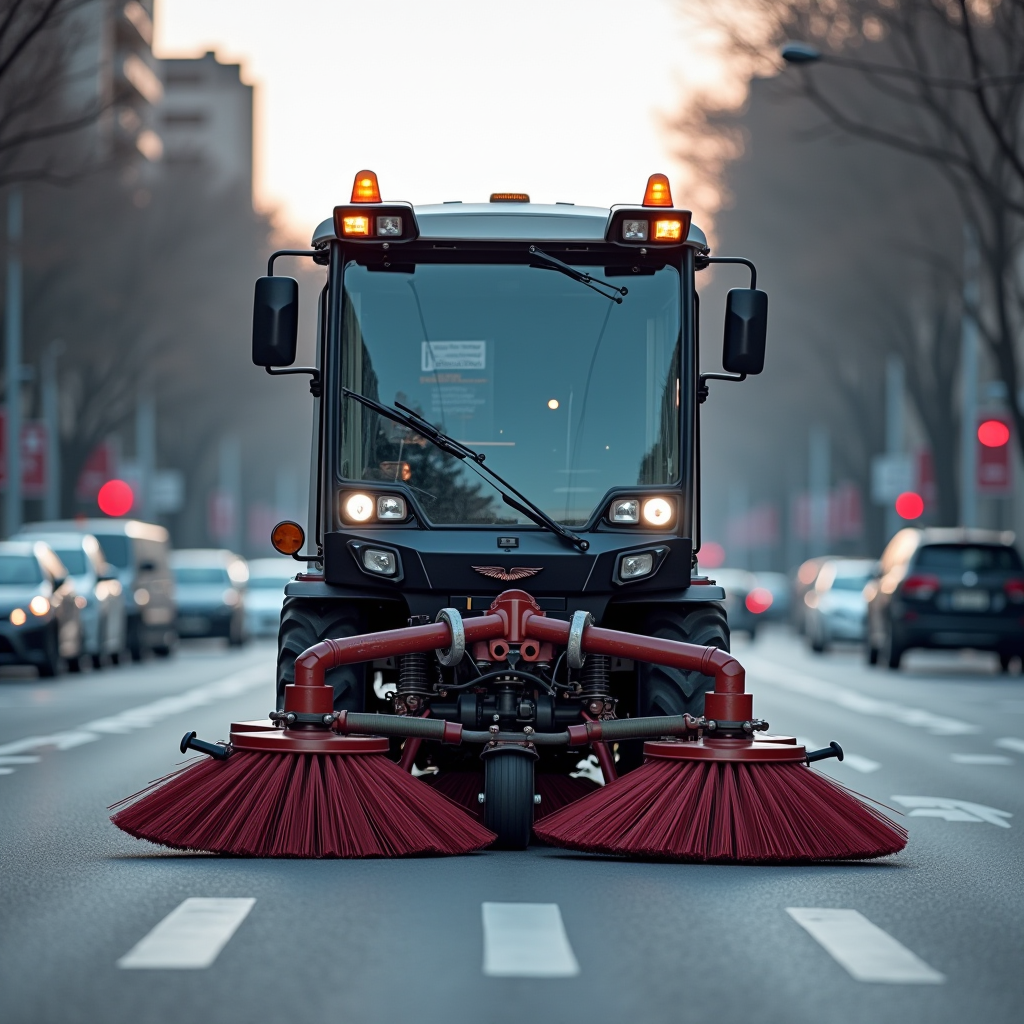
Most street cleaning equipment relies on gas-powered engines, mechanical brushes, and vacuum systems that are inefficient by modern standards. These machines are heavy, cumbersome, and require significant maintenance. They're designed for large-scale operations on wide streets, making them poorly suited for the diverse cleaning needs of contemporary urban environments—from narrow pedestrian zones to bike lanes and public plazas.
The Maintenance Burden
The age of existing equipment compounds the problem. Many cities operate street sweepers that are 15, 20, or even 25 years old. While these machines were built to last, their advanced age means they require constant maintenance and repairs. Parts become increasingly difficult to source, and downtime for repairs means fewer streets get cleaned.
Municipal fleet managers report spending an average of 30-40% of their annual budgets on maintenance and repairs for aging street cleaning equipment. This creates a vicious cycle: limited budgets mean cities can't afford to replace old equipment, so they pour money into keeping outdated machines running, leaving even less available for modernization.
The True Cost of Old Equipment
A comprehensive analysis of municipal cleaning operations reveals that cities using equipment more than 15 years old spend approximately 60% more on total operating costs compared to those with modern fleets. This includes not just maintenance, but also fuel consumption, labor inefficiency, and reduced cleaning effectiveness.
Furthermore, older equipment breaks down more frequently, leading to service disruptions that can leave entire neighborhoods without cleaning services for extended periods. The cumulative effect on urban cleanliness and public satisfaction is substantial.
The Environmental Impact: A Hidden Crisis
Beyond the operational challenges, traditional street cleaning methods carry a significant environmental burden that is increasingly at odds with cities' sustainability goals. The environmental impact of conventional street cleaning equipment extends across multiple dimensions, from air quality to noise pollution to carbon emissions.
Air Quality and Emissions
Gas-powered street sweepers are substantial contributors to urban air pollution. A typical diesel-powered street sweeper emits approximately 15-20 tons of carbon dioxide annually, along with significant amounts of nitrogen oxides, particulate matter, and other harmful pollutants. In cities with large fleets of these vehicles, the cumulative impact on air quality is considerable.
The irony is stark: equipment designed to clean our streets is simultaneously polluting our air. This contradiction becomes particularly problematic in cities working to meet air quality standards and reduce their carbon footprints. Many municipalities find themselves in the uncomfortable position of operating cleaning equipment that undermines their broader environmental objectives.
- Average diesel street sweeper produces emissions equivalent to 15-20 passenger vehicles
- Particulate matter from exhaust contributes to respiratory health issues in urban populations
- Noise pollution from gas-powered equipment exceeds 85 decibels, disrupting communities
- Fuel consumption averages 3-5 gallons per hour of operation
- Annual fuel costs per vehicle range from $8,000 to $15,000
Noise Pollution and Community Impact
The noise generated by traditional street cleaning equipment is another often-overlooked environmental concern. Gas-powered sweepers typically operate at noise levels between 85 and 95 decibels—comparable to a motorcycle or lawn mower. When these machines operate in the early morning hours, as they often must to avoid traffic, they disrupt sleep and quality of life for residents.
This noise pollution isn't just an annoyance; it has documented health impacts. Chronic exposure to high noise levels is associated with increased stress, cardiovascular problems, and sleep disorders. For cities trying to create livable, healthy urban environments, the noise from street cleaning equipment represents a significant quality-of-life issue.
The Financial Burden: Rising Costs and Shrinking Budgets
Municipal budgets are under constant pressure, and street cleaning departments are feeling the squeeze. The cost of maintaining clean streets has risen dramatically over the past decade, while many cities have seen their budgets remain flat or even decrease in real terms.
The financial challenges are multifaceted. Labor costs continue to rise, driven by the need to offer competitive wages to attract workers in a tight labor market. Equipment maintenance expenses increase as fleets age. Fuel costs fluctuate but trend upward over time. Meanwhile, cities face growing demands for services across all departments, creating intense competition for limited resources.
The result is a system that is increasingly unsustainable. Cities are forced to make difficult choices: reduce cleaning frequency, cut routes, or defer equipment replacement. Each of these decisions has consequences for urban cleanliness and quality of life. Some cities have attempted to offset costs by reducing service levels in lower-traffic areas, but this often leads to complaints from residents and can contribute to neighborhood decline.
Why Traditional Methods Fall Short in Modern Cities
Beyond the specific challenges of labor, equipment, and costs, there's a fundamental mismatch between traditional street cleaning methods and the needs of contemporary urban environments. Cities have evolved dramatically over the past few decades, but street cleaning approaches have largely remained static.
Modern cities are more complex and diverse than ever before. They feature pedestrian zones, bike lanes, outdoor dining areas, public plazas, and mixed-use spaces that don't fit neatly into the traditional street-sweeping paradigm. Large, heavy equipment designed for wide streets and simple debris collection struggles to adapt to these varied environments.
The Flexibility Problem
Traditional street sweepers are designed for specific tasks and environments. They excel at cleaning wide, straight streets with predictable debris patterns. But they're poorly suited for the diverse cleaning challenges of modern urban spaces. Narrow pedestrian walkways, crowded public squares, areas with outdoor furniture and fixtures—these spaces require different approaches and more flexible equipment.
The lack of flexibility extends to scheduling and deployment as well. Large street sweepers require significant setup time, can only operate in certain conditions, and are difficult to deploy quickly in response to specific needs. When a public event generates unexpected debris, or when a particular area needs immediate attention, traditional equipment often can't respond effectively.
"We're trying to clean 21st-century cities with 20th-century tools. The mismatch is becoming increasingly apparent, and it's affecting our ability to maintain the clean, healthy environments our residents deserve." — Director of Public Works, Major Metropolitan City
The Urgent Need for Innovation
The convergence of these challenges—labor shortages, outdated equipment, environmental concerns, budget pressures, and changing urban landscapes—creates an urgent imperative for innovation in street cleaning. The status quo is simply not sustainable. Cities need new approaches, new technologies, and new thinking about how to keep urban spaces clean.
Innovation in this space isn't just about incremental improvements to existing methods. It requires rethinking fundamental assumptions about how street cleaning should work. What if equipment could be smaller, more maneuverable, and better suited to diverse urban environments? What if it could operate quietly, without emissions, and at a fraction of the current cost? What if it could be deployed more flexibly, responding quickly to specific needs rather than following rigid schedules?
The Promise of New Technologies
Emerging technologies offer promising solutions to many of these challenges. Electric power systems can eliminate emissions and dramatically reduce noise. Advanced battery technology makes it possible to operate for extended periods without the weight and complexity of gas engines. Compact designs can navigate spaces that traditional equipment cannot reach. Smart sensors and automation can improve efficiency and reduce labor requirements.
But technology alone isn't enough. Innovation must also address the practical realities of municipal operations: equipment must be affordable, maintainable, and reliable. It must integrate with existing workflows and be accessible to workers with varying levels of technical expertise. Most importantly, it must deliver tangible improvements in cleaning effectiveness and operational efficiency.
Looking Forward: A Call to Action
The challenges facing urban street cleaning are significant, but they're not insurmountable. What's required is a recognition that the current approach is failing and a willingness to embrace new solutions. Cities, equipment manufacturers, innovators, and communities must work together to develop and deploy the next generation of street cleaning technology.
The stakes are high. Clean streets aren't just about aesthetics—they're fundamental to public health, environmental quality, and urban livability. They affect property values, economic development, and community pride. As cities continue to grow and evolve, the need for effective, sustainable street cleaning will only become more critical.
The good news is that solutions are emerging. Innovators and entrepreneurs are developing new approaches that address the shortcomings of traditional methods. These solutions promise to make street cleaning more effective, more sustainable, and more affordable. But they need support—from city governments willing to try new approaches, from communities willing to embrace change, and from individuals who recognize the importance of clean urban environments.
The crisis in urban street cleaning is real and growing. But it also represents an opportunity—an opportunity to reimagine how we maintain our cities, to develop solutions that are better for workers, better for the environment, and better for communities. The question is not whether change is needed, but whether we have the vision and commitment to make it happen.
The future of our cities depends on our ability to keep them clean, healthy, and livable. Traditional methods are failing us. It's time for innovation to lead the way toward a cleaner, more sustainable urban future.